Empowering Team Human with AI‑SEO
We believe that when people grow together, everyone rises. Welcome to Team Human.
“A rising tide lifts all boats”
— John F. Kennedy
Join Our Free Member’s Area

Meet Our Founder: Russell Wright
In this short preview, Russell Wright sits down with AI to discuss the future of search — from early SEO breakthroughs to the dawn of answer engines, insight scoring, and superintelligent frameworks.
This is just a teaser from a much deeper 90-minute conversation between Russell and an AI assistant about the evolution of SEO, how traditional search is collapsing, and what comes next for content, AI, and online visibility.
Start Here: What We Do, Who It’s For, and Why It Matters
Super-Intelligent AI‑SEO equips professionals with tools and training to stay visible and profitable in the era of AI-driven search and recommendation engines.
We serve SEOs, agency owners, content creators, and digital strategists navigating the shift from keywords to meaning — from search engines to language models.
You don’t need to be technical. But you do need to be strategic. This space blends automation with human-first insight so your content performs — not just ranks.
See What’s Inside the Member’s Area →What’s Inside the Member’s Area
- Eureka AI Content Creation ($250/mo): Includes access to the Eureka Gain Score system—our original method for content grading based on insight and machine-readability—along with GrowthWorks and FastSites. Co-creation training included.
- Move 37 Mastermind ($997/mo): Our flagship R&D space led by Daryl Osborne and Russell Wright. Includes 12 premium tools, a private AI server, and deep-dive optimization strategies.
- Jimmy Kelley Entity SEO Reloaded ($397/mo): Co-led by Jimmy Kelley and Kalyn Wright, this space dives deep into site structure, entity stacking, and advanced SEO frameworks. Includes access to Rank Maps with Brand Signals and the soon-coming Tiger system.
- Local Agency Elite Training ($199/mo): Kalyn Wright’s coaching space for consultants offering Map Engine Optimization (MEO) services to local businesses. Includes positioning, pricing, and campaign automation workflows.
- Local Maps Growth ($97/mo): Built for business owners managing their own visibility. Includes step-by-step map profile optimization and monthly update training.
- AI for All ($29.99/mo): Entry-level AI training for creators and solopreneurs. Includes free access to Fast Sites AI (normally $49/mo), plus core AI toolkits and tutorials.
- Agency Elite Coaching ($500/mo): Private weekly coaching with Kalyn Wright for scaling agency services, pricing, delivery, and positioning.
- Move 37 Coaching ($1000/mo): Private strategy sessions with Russell Wright for advanced innovation frameworks and custom AI implementation.
Explore the Tool Stack
All tools below are included with membership in any paid SEO Space.
Eureka Gain Score
Our proprietary scoring system evaluates content originality, insight density, and machine-readability — helping you rank in both search engines and LLMs. If your content isn't gaining, it’s fading. The score doesn’t lie.
AI Site Generator
Spin up fast-loading, SEO-optimized websites with AI-powered page building.
Reputation Publisher
Automate review display and publishing across platforms with enterprise-level control.
AI Campaign Builder
Plan, execute, and scale client deliverables with structured workflows and AI assistance.
Local Visibility Engine
Manage Google Business visibility and AI-powered reporting for maps, impressions, and driving directions.
Map Impression Engine
Trigger and measure local brand signals across entity-based citation hubs and geo-web touchpoints.
Quora Syndication Panel
Syndicate expert content to Quora with unlimited boosting power and account-level controls.
LLM Tool Access
Use included token credits to generate content, prompt GPTs, and experiment with AI agents.
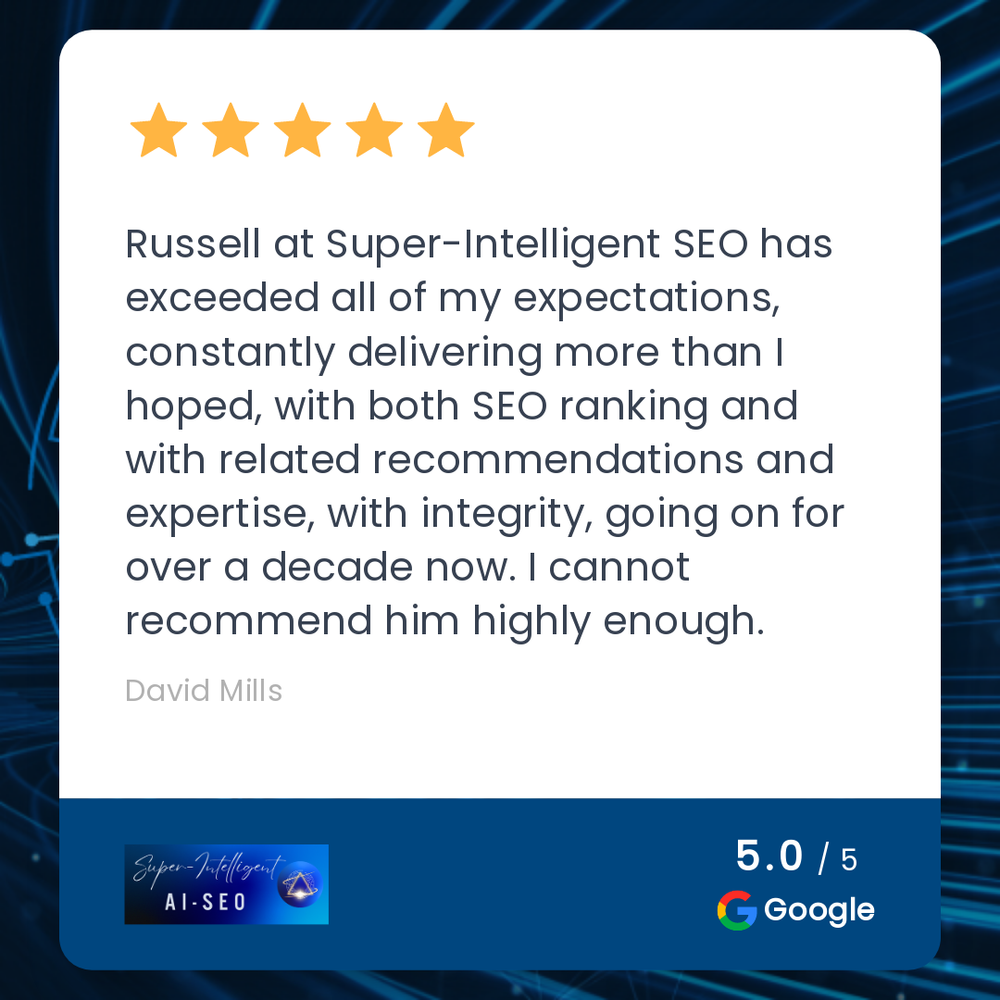
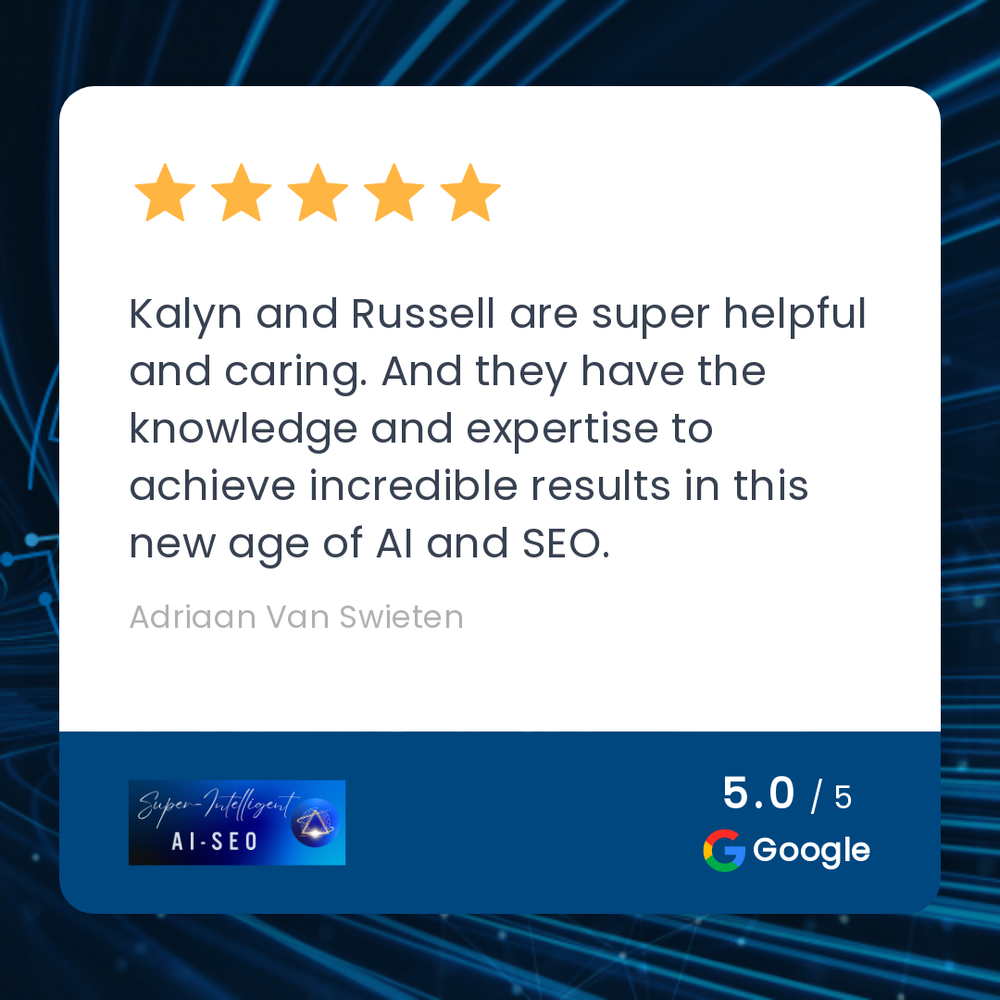
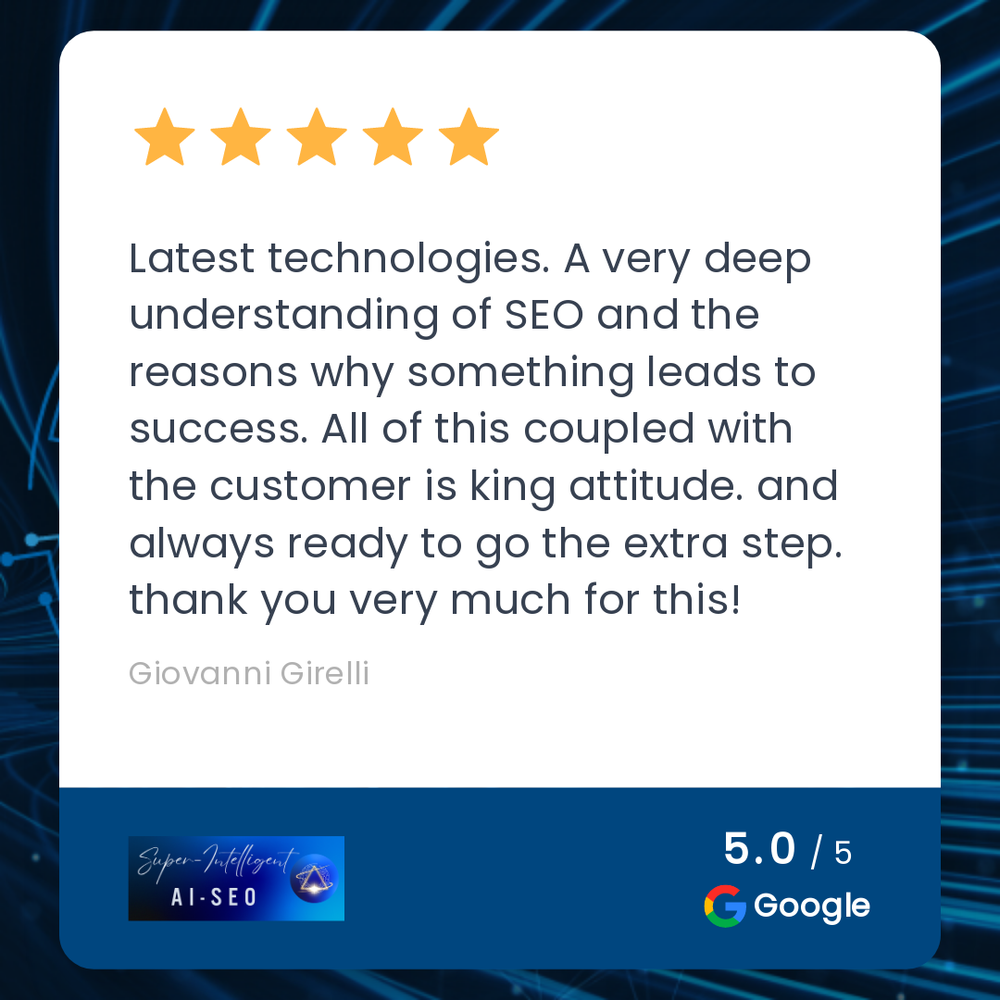
What Members Are Saying
Verified feedback from SEO pros, agency owners, and community members — shared during live meetings and real-world results.
“This is the first time I’ve seen content grading actually produce measurable lift. Eureka Gain is the missing layer.”
— Member, July 2025 Townhall
“You guys have built the only system that accounts for entity clusters, site structure, and human resonance all at once.”
— Live Member Feedback, July 2025
“I’ve been following this work since 2014. I’ve never seen anyone do SEO like this.”
— Verified Townhall Participant
Greg Morrison — Co-Founder, OMG Machines
Mike Clay — SEO Veteran & Systems Coach
Who We Are
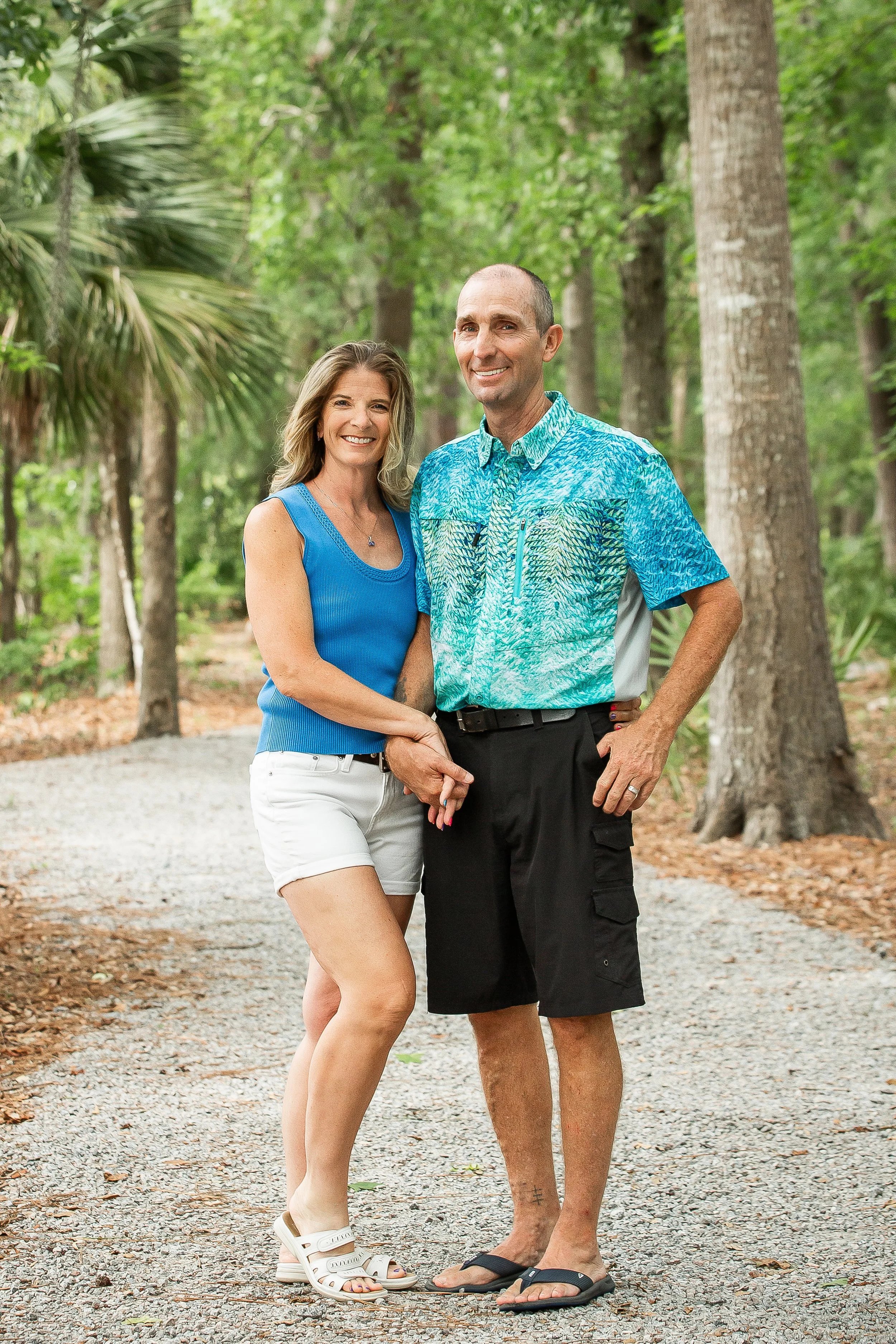
We’re Kalyn and Russell Wright, co‑founders of Super‑Intelligent AI‑SEO. With over 40 years of combined experience in search, persuasion, neuromarketing, and AI‑SEO, we’ve helped thousands of marketers, SEOs, and entrepreneurs grow lasting digital brands.
This platform is where cutting-edge AI meets grounded SEO frameworks. We focus on tools and training that make your brand more trustworthy, visible, and future-proof.
We also live and travel full-time in an RV with our family, building this ecosystem from the road — proof that the digital economy can support freedom and flexibility. Read our story →

What makes this platform different?
Unlike SEO courses or tool subscriptions, Super‑Intelligent AI‑SEO is a living R&D network with collaborative training, exclusive tools, and access to real-time strategy from industry pioneers.
Can I just watch instead of participate?
Yes. Some members prefer to absorb insights without actively engaging. We design our spaces to accommodate both contributors and observers.